

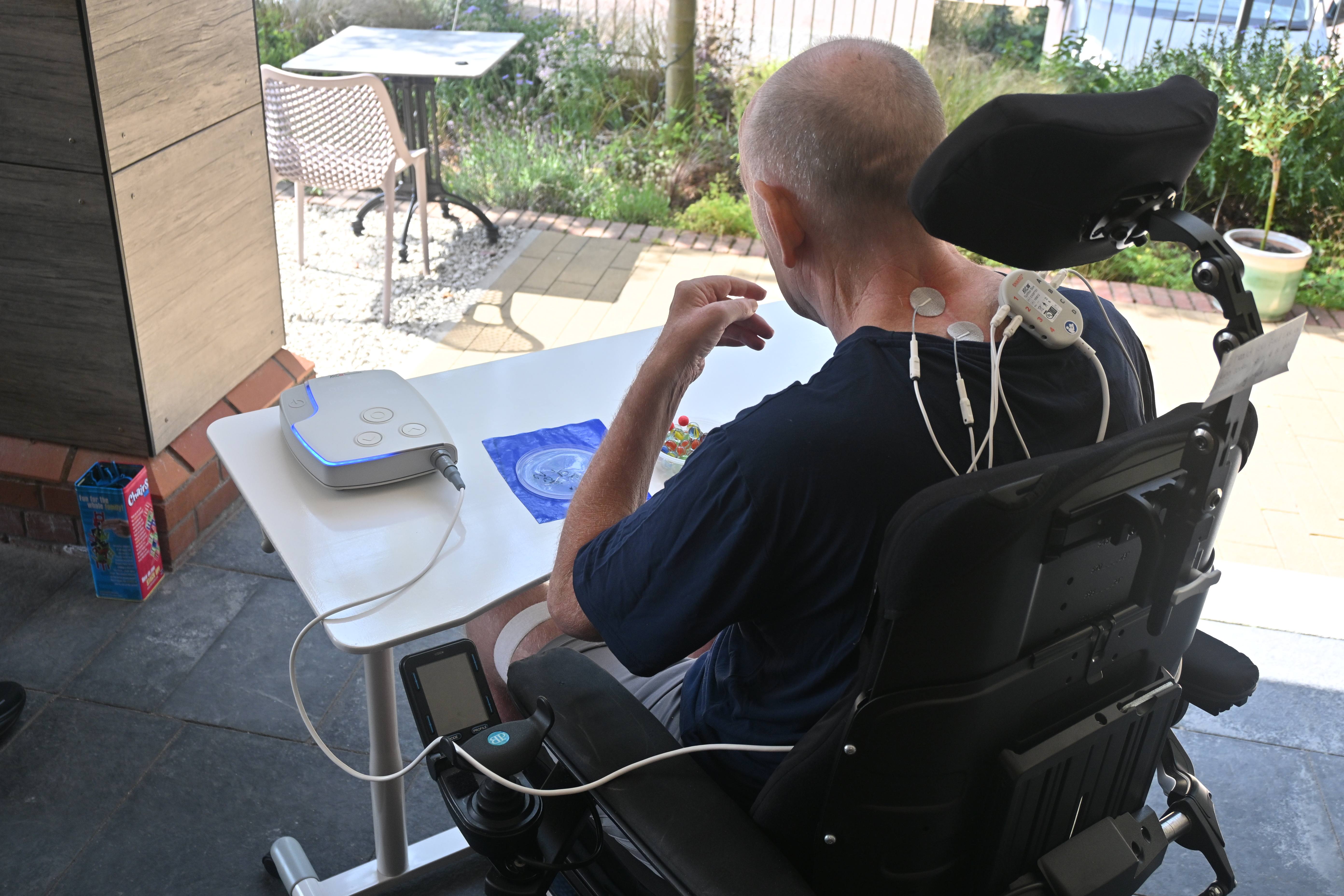
STEPS Rehabilitation® in Sheffield continues to lead the way in neurological rehabilitation with the introduction of the ARC-EX System from ONWARD Medical, a technology designed to support recovery of arm and hand function in people living with incomplete spinal cord injury.
Approved for use in the UK in late 2025, STEPS Rehabilitation is proud to be among the first rehabilitation providers in Europe to invest in ARC-EX for its residential programmes, giving clients access to one of the most exciting neurorehabilitation developments in recent years.
Toria Chan, Founder & Clinical Director said: “I have been following ONWARD’s journey over the last few years, speaking to members of their team at ISCOS in Antwerp and Gothenburg in anticipation of their product becoming available in the UK. Knowing the difference this has the potential to make to the lives of our clients living with SCI is so exciting. At STEPS, we are always looking for ways to optimise outcomes, and seeing what this technology can achieve first hand is remarkable. We anticipate these improvements will have a significant impact on clients’ dignity and quality of life.
At STEPS, we invest in the latest and most innovative technologies after extensive research to ensure they align with our rehabilitation vision. Working with companies that are open to collaboration, whether to refine their technology or improve how it is integrated into programmes, is key for us.”
The ARC-EX
ARC-EX is a non-invasive neuromodulation device that uses gentle electrical stimulation, delivered through electrodes placed over the neck, to activate the spinal cord. By enhancing communication between the brain and muscles, it helps strengthen signals passing through the nervous system, enabling individuals to make more effective use of existing movement and sensation.
Research to date has demonstrated encouraging outcomes, particularly when ARC-EX is combined with intensive, task-specific rehabilitation. Studies have shown improvements in grip strength, hand function, coordination and the ability to perform everyday activities, even for people living with chronic spinal cord injuries.
Clinical evidence also supports:
· High-dose, long-duration rehabilitation programmes rather than short treatment blocks
· Combining neuromodulation with functional training to maximise outcomes
· The potential for continued neuroplastic change, even years after injury
· The delivery of advanced rehabilitation technology in community-based settings, not solely in research laboratories
Spinal cord injury rehabilitation at STEPS Rehabilitation
ARC-EX is already being incorporated into therapy programmes at STEPS Rehabilitation, with residential clients completing one-hour sessions, five days a week, alongside their wider programme.
Early experiences have been extremely encouraging. One client undertaking an ARC-EX programme has already demonstrated new active muscle contractions in the fingers of their right hand within the first week of treatment. Therapy is currently focused on isolated finger movements, strengthening different grip patterns, improving reach and control, and developing more consistent hand release.
ARC-EX represents an exciting addition to the suite of innovative technologies available at STEPS Rehabilitation, reinforcing the organisation’s commitment to providing clients with access to the latest evidence-based therapies.
Source: STEPS Rehabilitation
Image: ARC-EX, submitted by STEPS Rehabilitation
