

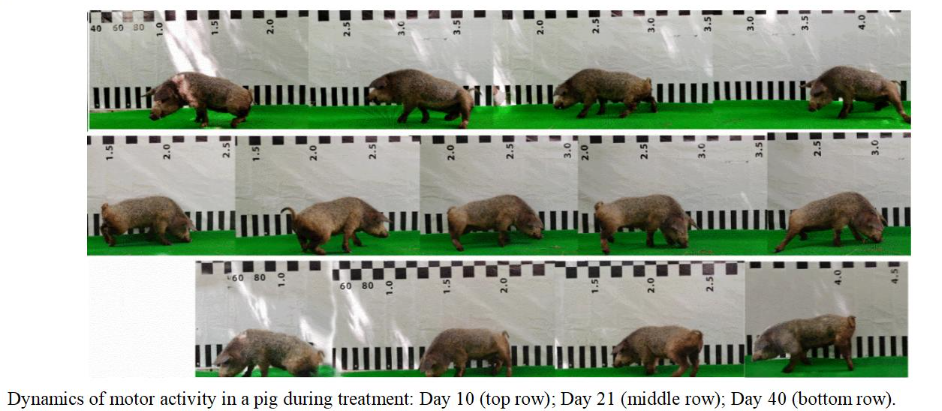
An international team of researchers has restored motor, sensory, and pelvic functions after complete spinal cord transection in animal models. To achieve this, the researchers used a combined protocol consisting of fusogenic therapy and comprehensive rehabilitation. The study results were published in the peer-reviewed journal PLOS One.
The need for a new therapy
Following severe spinal cord injury, the axons of mammals, including humans, inevitably degenerate, edema develops, neurons die, and currently available methods aimed at preventing these processes remain ineffective. Consequently, spinal cord injury currently represents a critical challenge in neurosurgery. In recent decades, there has been growing interest in a new class of substances – fusogenic sealants – that can induce axonal membrane fusion, restoring their integrity. This energetically efficient repair mechanism is observed in amphibians through the action of fusogenic proteins and can be artificially initiated in higher animals using synthetic compounds. Polyethylene glycol, capable of inducing membrane fusion, and chitosan, which serves as a biomatrix and a neuroprotective agent, form the basis of this method.
Background of the study
A team of scientists led by neurosurgeon Michael Lebenstein-Gumovski, Senior Scientific Officer at the Sklifosovsky Research and Clinical Institute for Emergency Medicine, MD, PhD, has been studying the effectiveness of fusogen-based membrane fusion technologies for over 10 years. In addition to synthesizing a fusogenic compound — a polyethylene glycol-chitosan conjugate (Neuro-PEG) — the researchers have developed a comprehensive technology for fusogenic repair and multi-component rehabilitation for spinal cord injury, which is inextricably linked to successful recovery. The mechanism of action of fusogens is not based on regeneration through axon growth or the generation of new neurons, but solely through the primary fusion of axonal membranes, which is partially stochastic in nature and cannot yet be controlled with absolute precision.
The study’s unique features
A new study titled “Fusogen-induced recovery of spinal cord function and morphology after complete transection” examined the effects of fusogenic therapy on the functional and morphological recovery of the spinal cord following complete transection at the thoracic region. H